What to Buy in Dubai: 15 Souvenirs Worth Bringing Home
The best things to buy in Dubai: dates, Arabic perfume and oud, gold, spices, camel milk chocolate and more — where to buy each, plus one practical tip per item.
11 min read
The best things to buy in Dubai are dates, Arabic perfume and oud, gold jewellery, spices, and camel milk chocolate, plus a handful of pieces you won't find anywhere else. Below are 15 souvenirs and gifts worth carrying home — where to buy each, roughly what to expect, and one practical tip per item. Skip the fridge magnets and the miniature Burj Khalifas; there are better ways to remember the city.
The 15 at a glance
- Dates — Bateel for gift boxes, supermarkets for everyday quantities.
- Arabic perfume and oud — attars from Ajmal, Arabian Oud, and the Perfume Souk.
- Bakhoor and incense burners — the smell of a Gulf home.
- Gold jewellery — Deira Gold Souk, priced from weight plus making charge.
- Spices and saffron — Deira Spice Souk.
- Camel milk chocolate — Al Nassma bars and pralines.
- Arabic coffee and a dallah — the cardamom-forward brew and its pot.
- Pashmina and scarves — Bur Dubai Textile Souk.
- Persian and Arabic carpets — hand-knotted, negotiate hard.
- Hand-painted and Arabic calligraphy art — Alserkal Avenue and DIFC galleries.
- Traditional lanterns (fanoos) — brass, copper, coloured glass.
- Sidr honey — Yemeni, rare, prized.
- A watch with a Dubai story — a small, honest thing you can wear.
- Local designer fashion and accessories — Emirati labels.
- Duty-free finds at DXB — a few things that are genuinely worth it.
1. Dates
Dates are the easiest gift in Dubai and probably the one people actually finish eating. Bateel is the premium option — its shops sit inside almost every major mall (Dubai Mall, Mall of the Emirates, City Walk) and sell boxed medjool, ajwa, khudri and stuffed varieties that travel well. For the same fruit at a fraction of the price, walk into any Carrefour, Lulu or Union Coop: the fresh-date counter carries the same regional varieties by weight. Suits anyone. Practical tip: vacuum-sealed boxes travel better than loose dates — they don't sweat in a warm suitcase, and they're allowed in many countries, but some (for example Australia and New Zealand) have strict food rules, so check before you fly.
2. Arabic perfume and oud
Arabic perfume is denser and lasts longer than a Western spray. Two mainstream houses have shops in most malls: Ajmal and Arabian Oud. For the wider selection, head to the Perfume Souk in Deira, one street over from the Gold Souk. Ask for attar (oil-based, tiny bottles, no alcohol), oud (rich, woody, aged) or a mukhallat (blend). A small oud vial makes a memorable gift; a full 100 ml mukhallat is a serious present. Suits perfume lovers, and anyone curious about scent. Tip: sample on skin, not paper — attars change over the first hour, and what you smell in the shop is not what you'll wear home.
3. Bakhoor and incense burners
Walk into an Emirati home and you'll likely smell bakhoor — wood chips soaked in fragrance oils, burned briefly on charcoal or a small electric burner. It's the scent of hospitality here. The Perfume Souk in Deira stocks it in every price bracket, from a small bag to gift-wrapped boxes; the electric burners are more practical abroad than the charcoal kind. Suits anyone who liked how the malls or hotels smell. Tip: pair the bakhoor with an electric burner in the same purchase — chocolate-brown chips look pretty on a shelf, but without a burner they're useless.
4. Gold jewellery
Dubai's Gold Souk in Deira is the classic destination — a covered lane packed with tiny shops, most windows heavy with 22-karat chains, bangles and coins. Gold here is not priced per piece. It's priced by weight × the daily gold rate + a per-gram making charge, and the day's rate is posted on displays in every shop. That transparency is why the souk feels cheap: you're paying close to the metal price. Bargain the making charge, not the gold itself; that's where the shopkeeper has room. Ask for a hallmark and receipt so customs and insurance in your home country recognise the piece. Suits anyone buying a proper gift or making a small investment.
5. Spices and saffron
The Spice Souk is a short walk from the Gold Souk in Deira. Every stall has open sacks of za'atar, sumac, baharat blends, dried limes (loomi), rose petals and cardamom. Iranian saffron is widely sold; the top grade (all-red stigma) is worth the premium if you actually cook with it. Suits anyone in the kitchen. Tip: ask the seller to vacuum-seal anything strong-smelling before it goes in your suitcase, and store saffron in the little metal tins the shops sell rather than the paper twist — it keeps its aroma for a year.
6. Camel milk chocolate
Al Nassma makes chocolate with camel milk, sold in bars, pralines and camel-shaped novelties. It tastes creamier and slightly less sweet than dairy chocolate, without the strong flavour people expect from the word "camel". You'll find it at boutique counters in the major malls and at DXB duty-free. Suits anyone who likes a genuinely local flavour and a gift that photographs well. Tip: camel milk chocolate melts in Dubai summer heat — hand-carry it in an air-conditioned bag if you're travelling in June–September, or ask the shop for a chilled sleeve.
7. Arabic coffee and a dallah coffee pot
Arabic coffee is lightly roasted, cardamom-forward and served in small handleless cups. Buy the ground coffee (look for the word qahwa) at any supermarket or at the Spice Souk; cardamom goes in during brewing. The dallah — a long-spouted brass or copper pot — is the traditional serving vessel, and a striking gift on its own. Old Souk shops in Bur Dubai and Deira sell them from small (a nice object) to enormous (purely decorative). Suits home entertainers and coffee obsessives. Tip: check the pot's base is flat if you plan to actually brew in it; the ornamental ones are for display only.
8. Pashmina and scarves
Real pashmina is spun from the winter undercoat of Ladakh's Changthangi goats — soft, warm, wispy, and not cheap. The Bur Dubai Textile Souk across the creek from Deira is the traditional place to shop, plus a growing number of small boutiques around Alserkal and City Walk. Prices in the souk are negotiable and climb quickly with weave density and embroidery. Suits gift-giving to a partner or a parent. Tip: the burn test — a shopkeeper will hold a flame to a stray fibre; real wool smells like burnt hair and turns to ash, synthetic melts into a bead.
9. Persian and Arabic carpets
Hand-knotted carpets are a serious purchase — the good ones outlast the buyer. Dubai has been a rug-trading hub for decades: reputable shops sit in Deira and Bur Dubai, and Global Village (open in the cooler months) has carpet sellers from Iran and the region. Ask about origin, wool vs silk, knots per square inch and dye source (natural vs synthetic) — a decent seller will show you the back. Bargaining is expected; start well below the asking price. Suits a once-in-a-lifetime gift. Tip: get a written certificate of origin — you'll need it for insurance, and in some countries for customs.
10. Hand-painted and Arabic calligraphy art
Alserkal Avenue in Al Quoz is the city's contemporary art district — warehouses converted into galleries showing Emirati and regional artists, from a few hundred dirhams for a print to five-figure originals. DIFC hosts a cluster of commercial galleries too. For affordable calligraphy pieces, the Old Souk in Bur Dubai has stalls that sell hand-lettered Quranic verses and single-word paintings; Global Village during the winter season is another source. Suits people who want a keepsake with actual craft in it. Tip: for framed pieces, ask the shop to remove the glass and pack the artwork flat for the flight — reframing at home is cheap and safer than gambling on baggage handlers.
11. Traditional lanterns
Brass, copper and coloured-glass fanoos (lanterns) turn up in every souk in Dubai. The Old Souk in Bur Dubai has the widest selection, from pocket-sized to floor-standing, and the shops there will bubble-wrap on request. Suits anyone who liked the Ramadan lighting in the city and wants a piece of it. Tip: lanterns are fragile — coloured-glass panels crack in checked luggage. Pack them in hand luggage wrapped in scarves, or ask the shop to bubble-wrap and box them. Also check the bulb fitting before you buy, and remember the wiring is UAE-standard — you may need a plug adapter or a small rewire at home.
12. Sidr honey
Sidr honey — from bees feeding on the sidr tree (jujube), mostly harvested in Yemen — is the region's prized honey. It's dark, thick, faintly medicinal, and expensive because the tree flowers only briefly each year. One Yemeni sidr honey label widely sold in the UAE is Balqees; the good stuff is at specialty honey shops in Bur Dubai and at mall food halls. Suits foodies and anyone who takes their honey seriously. Tip: read the label for country of origin — Yemeni or Hadhramaut sidr commands a premium; a lot of what's labelled "sidr" in supermarkets is a blend from other regions.
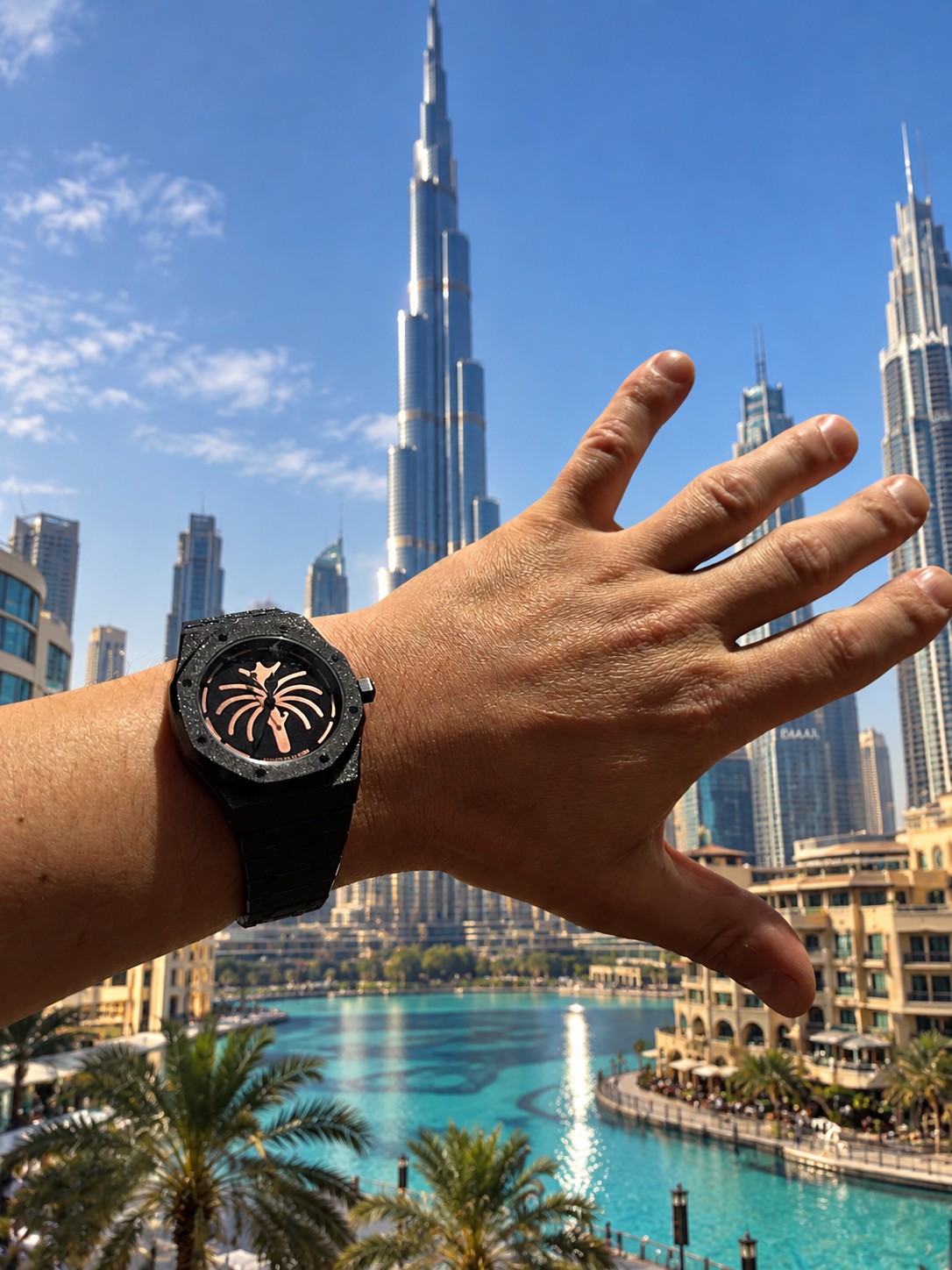
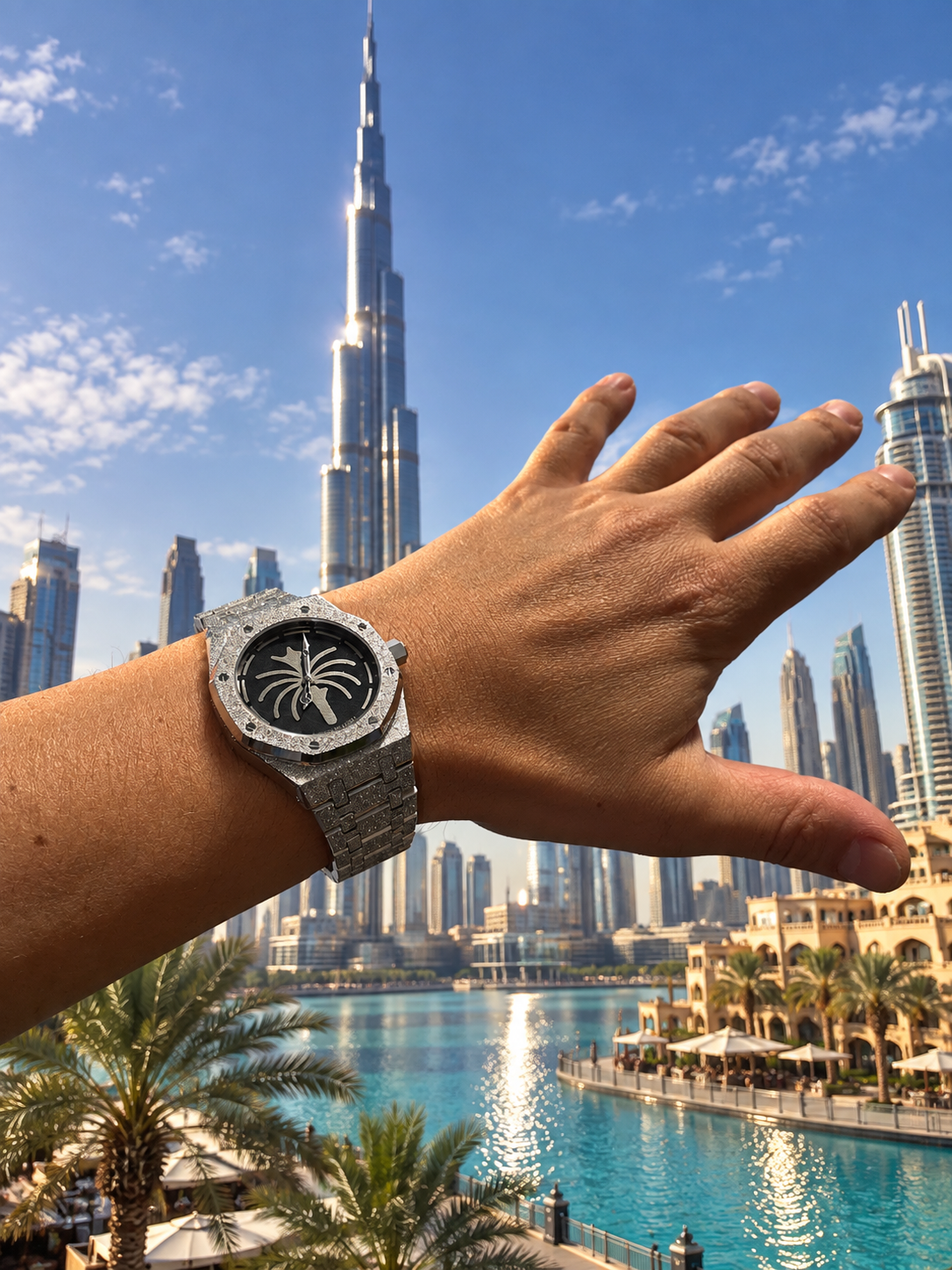
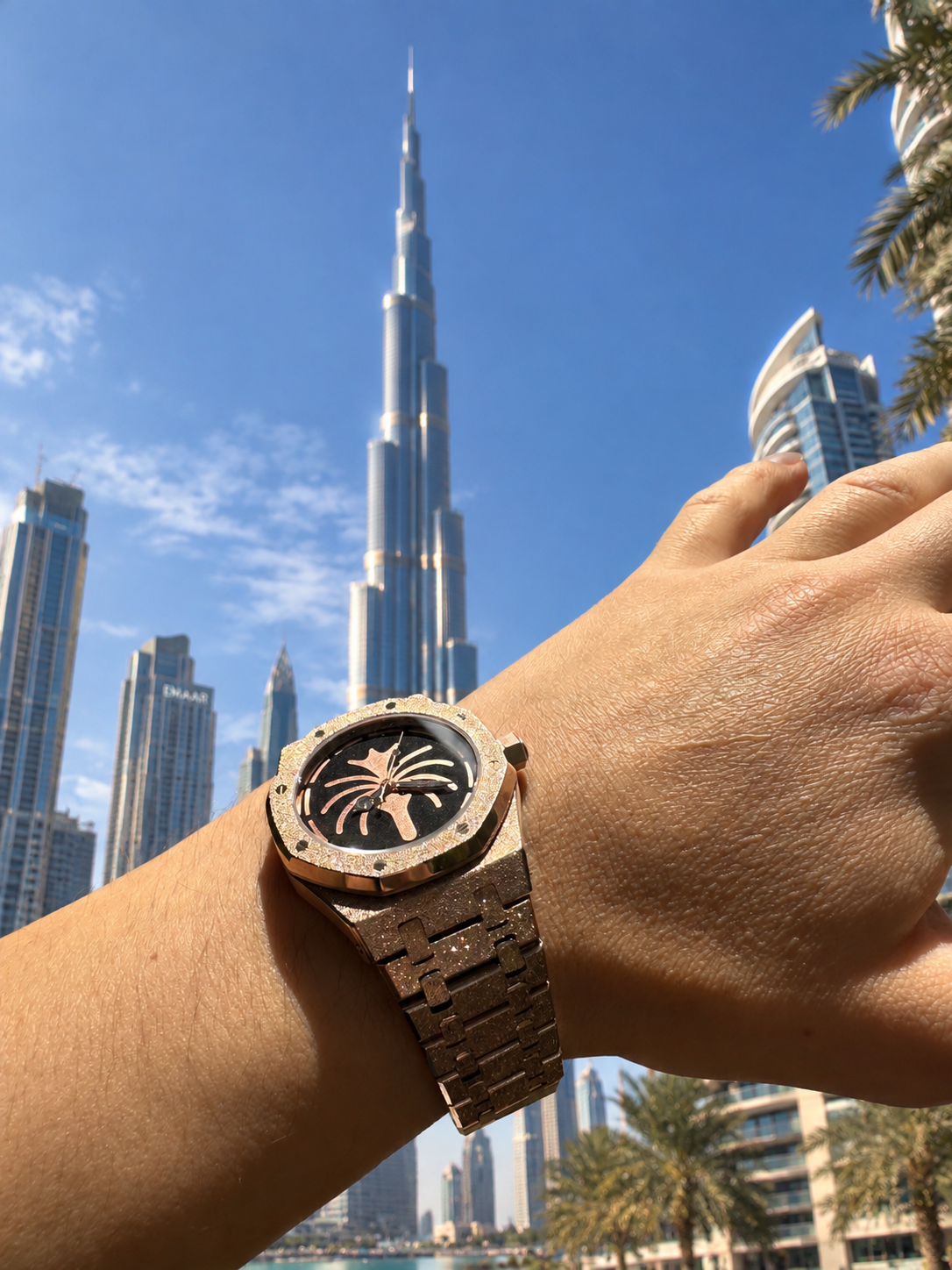
13. A watch with a Dubai story — The Palm Collection
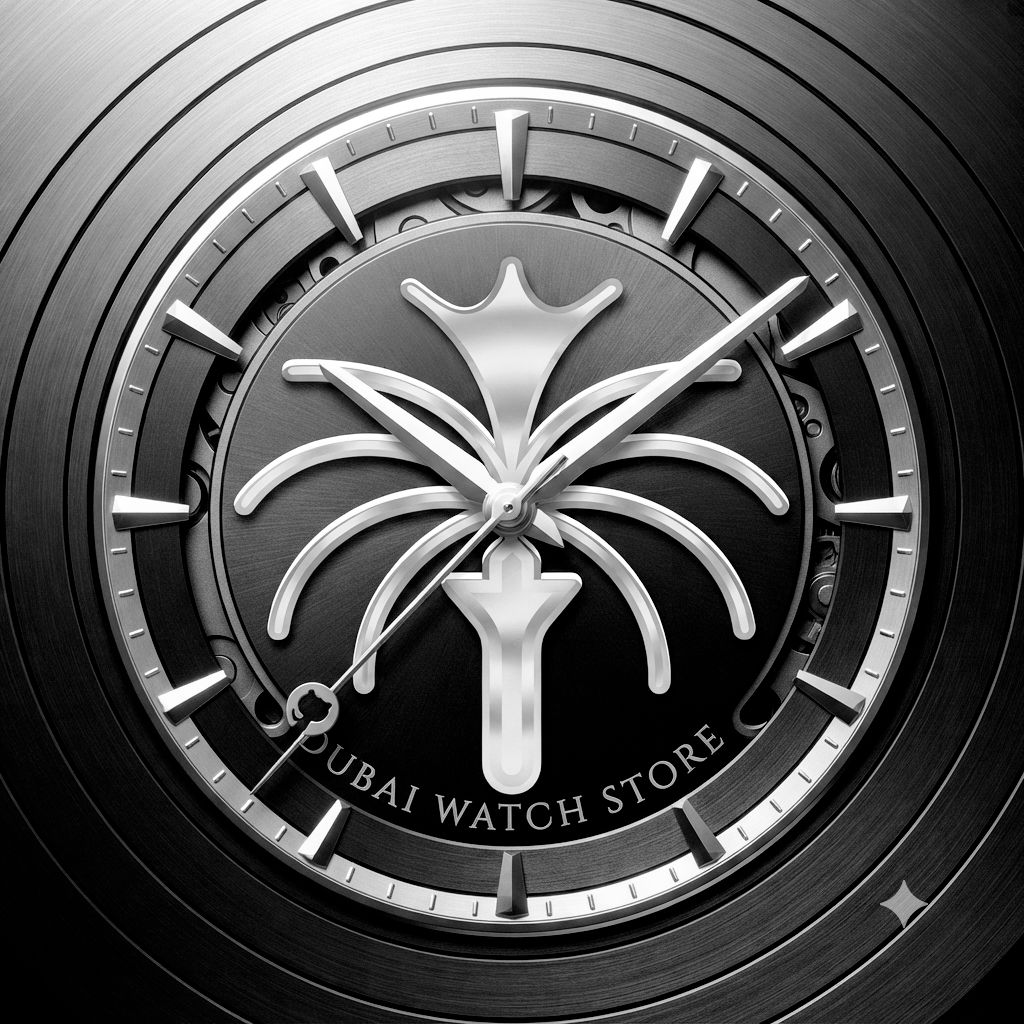
Full disclosure: I make these. If you want a Dubai souvenir you can wear that isn't mass-produced, this is my project: The Palm Collection — three one-of-one automatic watches, one Black (DLC), one Steel and one Gold (PVD), with a hand-designed Palm silhouette on the dial. None will be made again. Inside is a Japanese TMI automatic movement (NH70A, NH71A or NH72A, depending on the finish) with hand-winding, hacking seconds and about 41 hours of power reserve. 5,500 AED, free worldwide tracked shipping. Direct sale only, no reseller. It's a good fit for someone who wants a gift that says "Dubai" without a tourist logo, and who likes the idea of owning something exactly once. See the design story or browse the collection.
14. Local designer fashion and accessories
The mall floors are dominated by the same global brands you have at home, but a real local scene sits behind them. Emirati and Gulf-based designers make abayas, kaftans and modern womenswear that read as regional without being costume — one name worth searching is Bambah. Try Boxpark on Al Wasl Road, The Village in Jumeirah, and pop-ups at Alserkal Avenue for smaller labels. Suits gift-giving to someone with a sense of style — one modern abaya or a well-cut kaftan travels far better than a "I ♥ Dubai" t-shirt. Tip: sizing tends to run generous; the shop will often adjust hems on the spot.
15. Duty-free finds at DXB
Dubai's airport duty-free is genuinely useful, not just a formality. Worth the space in your bag: Bateel and Al Nassma; large-format perfumes and oud in gift sets; single-malt whisky and spirits often cheaper than at home (subject to your home-country duty allowance); Iranian saffron in vacuum tins. Skip the plush camel toys and the miniature Burj Khalifas — the souks have the same souvenirs, usually for less. Suits the passenger who realised at the gate that they didn't buy a gift. Tip: check your home country's duty-free allowance before you fly — overshoot and you'll pay duty on arrival.
Tips for Shopping in Dubai
Bargaining works in the souks — Deira Gold, Spice, Perfume and the Bur Dubai Textile Souk — and at older stand-alone shops. A friendly opening move is asking for the "best price" rather than the sticker; expect to meet somewhere between the first price and your first offer. Malls are fixed-price; don't try.
VAT refund for tourists. The UAE charges 5% VAT. If you're a non-resident tourist, most large stores can issue a Planet tax-free receipt at checkout — ask before you pay. At DXB, scan the QR at a Planet self-service kiosk before check-in; the refund is credited to a card, with cash available in some cases. There's a small handling fee, but on a bigger purchase it more than pays for itself.
Perfume and liquids in hand luggage. Standard security rule: 100 ml per container, all containers in a single clear 1 L bag. Attar bottles are usually well under that; a 100 ml perfume gift set is fine, a 250 ml bottle needs to go in the hold. Liquids bought at DXB duty-free come in a sealed security bag with the receipt, which lets you carry them in the cabin. If you connect through another airport, keep the bag sealed and check that airport's rules — some will still confiscate liquids over 100 ml.
Customs and personal use. Dubai has no duty on outbound personal souvenirs. Your home country decides what comes in — gold above a certain value usually needs to be declared, quantities of dates and spices are fine for personal use but not for resale, and hand-knotted carpets may need a certificate of origin. Check your country's customs website before you fly.
That's the shortlist. Skip the fridge magnets, buy two or three of the above, and Dubai will feel a lot more present in a year than a box full of trinkets. If you want to read more about how one of these is actually made, the Palm Collection design story is a slower read on the same theme.
FAQ
- What is the most famous thing to buy in Dubai?
- Gold from the Deira Gold Souk is the classic answer. Arabic perfume and oud, Bateel dates and Al Nassma camel milk chocolate follow closely — all easy to pack, easy to explain and unmistakably from the region.
- What is a good gift to bring back from Dubai?
- A boxed selection of Bateel dates, a tin of Al Nassma camel milk chocolate, or a small oud or attar sampler. They travel well, survive customs, and feel distinctly local without being touristy.
- Is gold cheaper in Dubai?
- Gold in the UAE is priced from the daily gold rate plus a per-gram making charge, with 5% VAT at the till (refundable for tourists via the Planet tax-free scheme). It's often competitive with Europe or North America, but compare the day's gold rate and the making charge before you buy. Tourists may be able to reclaim part of the VAT; ask the shop about a tax-free receipt.
- Can I get a VAT refund as a tourist in Dubai?
- Yes. Ask the shop to issue a Planet tax-free receipt when you pay, then validate it at the Planet kiosk at the airport before check-in. Refunds are paid to a card or in cash.
- What souvenirs from Dubai are good for men?
- An oud or attar sampler, a copper or brass dallah coffee pot, a good wristwatch, or a well-packaged tin of Bateel dates. Bakhoor with a small electric burner is another understated option that says Gulf without being loud.
The Palm Collection · 1 of 1
Related notes